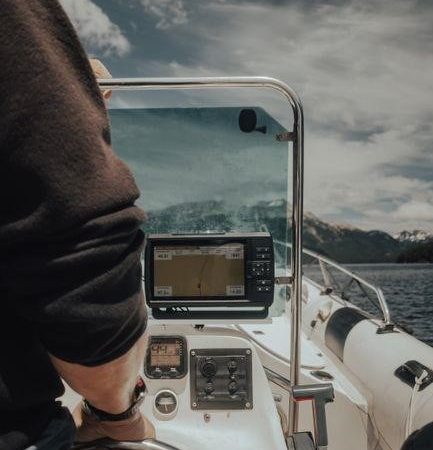
Explore the latest handheld navigation system, featuring a high‑resolution display, intuitive controls, and integrated GPS. Designed for marine enthusiasts, it offers real‑time chart updates, depth mapping, and customizable presets for efficient route planning. Compatible with diverse chart libraries and advanced routing

System Overview
The Simrad GO7 combines a rugged chassis with a 4.3‑inch capacitive touchscreen, offering seamless navigation. It supports GPS, GLONASS, and AIS, delivering accurate positioning and vessel tracking. The device runs on a custom OS, enabling fast chart rendering and route planning. All functions are accessible via a menu !
Hardware Components
The Simrad GO7 is engineered with a durable aluminum chassis that protects internal electronics from harsh marine environments. At its core lies a 4.3‑inch capacitive touchscreen, offering 480×320 resolution and a 300 ppi pixel density for crisp navigation displays. The device is powered by a 3‑cell Li‑ion battery, delivering up to 12 hours of continuous use at full brightness, and can be recharged via a USB‑C port or an optional AC adapter. Integrated GPS, GLONASS, and AIS receivers provide real‑time positioning, depth sounding, and vessel identification. A high‑speed ARM Cortex‑M7 processor, paired with 512 MB of RAM and 2 GB of internal flash, ensures smooth multitasking and rapid chart rendering. The GO7 supports up to 256 GB of external storage through a microSD slot, enabling extensive chart libraries. Connectivity options include Bluetooth 5.0 for peripheral pairing, Wi‑Fi 802.11 ac for firmware updates, and a serial port for external GPS or depth sounder integration. The device’s firmware supports over‑the‑air updates, ensuring that navigation data remains current without manual intervention.

All features IP68 and.
The chassis incorporates a recessed bezel that houses a 3‑axis gyroscope and a temperature sensor, allowing the system to compensate for vessel motion and ambient conditions. A 2.5‑inch display can be attached via the USB‑C port, providing a secondary view for crew members. The device’s firmware supportsOTA updatesensuring that navigation data remains current without manual intervention!
Software Architecture
The Simrad GO7’s firmware is built on a modular, real‑time operating system that allows simultaneous handling of navigation, chart rendering, and peripheral communication. At the lowest level, a lightweight kernel manages task scheduling, interrupt handling, and power‑management routines. The kernel exposes a set of APIs for higher‑level modules, enabling deterministic execution of GPS decoding, AIS processing, and depth‑sounder integration. A dedicated graphics engine, written in C++, renders vector‑based charts on the 480×320 display, while a multi‑threaded data‑fusion module merges satellite, depth, and AIS inputs into a unified situational awareness map. The firmware is compiled with optimization flags that target the ARM Cortex‑M7 core, ensuring that the 512 MB of RAM is efficiently allocated between the kernel, graphics buffers, and user‑defined scripts. The device’s software stack also includes a secure OTA update manager that verifies digital signatures before flashing new firmware or chart data, protecting against corrupted or malicious payloads. Peripheral drivers are abstracted through a plug‑in architecture, allowing third‑party developers to add support for additional sensors or external displays without modifying core code. Finally, a lightweight scripting engine exposes a subset of the device’s functionality to end‑users, enabling custom route planning, automated logging, and integration with external telemetry systems. This layered approach balances performance, reliability, and extensibility, ensuring that the GO7 remains a robust platform for both everyday cruising and advanced maritime operations. Moreover, the architecture supports a modular plugin system that allows developers to integrate third‑party navigation aids, such as advanced sonar overlays or satellite weather feeds, via a secure API. This extensibility ensures that the GO7 can evolve with emerging maritime technologies while maintaining a stable core platform. The firmware’s modular design also incorporates a real‑time diagnostics module that continuously monitors sensor health, battery status, and communication integrity, providing instant alerts on the touchscreen and logging events for post‑trip analysis. This proactive monitoring enhances safety and reliability across all operating conditions. Additionally, the system’s API layer is documented in a portal, enabling rapid prototyping of custom tools for devs!
Supported Sensors
The Simrad GO7 is engineered to interface with a broad spectrum of marine sensors, ensuring comprehensive situational awareness for every voyage. The device natively supports standard NMEA‑0183 and NMEA‑2000 protocols, allowing seamless integration of GPS receivers, depth sounders, echo‑sounders, and AIS units. In addition, the GO7’s dual‑port architecture accommodates both serial and CAN bus connections, enabling the attachment of auxiliary sensors such as temperature probes, wind vanes, and barometric altimeters. The firmware’s modular driver framework automatically detects and configures each connected sensor, presenting real‑time data on the touchscreen with minimal latency. For depth mapping, the GO7 accepts inputs from conventional single‑beam and multi‑beam echo‑sounders, as well as from integrated depth‑sounder modules that provide high‑resolution bathymetric charts. AIS receivers can be connected via USB or Bluetooth, delivering live traffic information and vessel identification. Optional sensor packs include a Doppler Velocity Log (DVL) for precise speed‑over‑water measurements, a temperature sensor for water‑temperature profiling, and a depth‑sounder with integrated temperature compensation. All sensors are calibrated through the GO7’s calibration utility, which guides users through a step‑by‑step procedure to ensure data integrity. Real‑time water‑temperature logging is also supported. The GO7’s software architecture includes a sensor‑fusion engine that combines inputs from multiple sources, producing a unified depth profile and navigation solution. Users can customize sensor priorities, set alert thresholds, and configure data logging intervals directly from the touchscreen menu. The device’s robust power management guarantees continuous operation of high‑current sensors without compromising battery life, thanks to an intelligent power‑distribution scheme that monitors load and dynamically adjusts voltage levels; With this extensive sensor support, the GO7 delivers a versatile platform for both recreational and professional marine navigation, enabling users to tailor the system to their specific operational needs. The GO7’s firmware supports firmware over‑the‑air updates for sensor drivers, guaranteeing compatibility with the latest sensor models and standards. Additionally, the GO7’s API allows developers to create custom sensor plugins, extending functionality to emerging technologies such as LiDAR‑based obstacle detection or satellite‑based oceanographic sensors. This future‑proof design ensures that the GO7 remains a cutting‑edge platform for maritime navigation and data acquisition. Furthermore, the GO7’s power‑management subsystem includes a dedicated low‑power mode for sensors, extending operational time during extended deployments. Users can toggle power states per sensor via the touchscreen, optimizing battery usage without sacrificing critical data streams. Overall, the extensive sensor ecosystem, combined with intelligent firmware and user‑friendly configuration tools, makes the Simrad GO7 a versatile and reliable companion for all maritime activities.
Setup and Installation
The Simrad GO7 installation begins with unpacking the unit, mounting it on a stable deck surface, and connecting the power supply. Follow the quick‑start guide to configure network settings, update firmware, and verify sensor connections before first use. Finally, test functions calibrate display for optimal visibility!.
Unpacking and Mounting
Begin by carefully removing the Simrad GO7 from its protective packaging. Inspect the enclosure for any visible damage and verify that all supplied accessories—mounting brackets, screws, cable harness, and the quick‑start guide—are present. The mounting kit is designed to secure the unit to a standard deck bracket or a custom mounting plate. First, position the GO7 on a clean, level surface and align the mounting holes with the bracket. Use the provided Phillips head screws to fasten the device, tightening them in a cross pattern to distribute pressure evenly. Avoid overtightening, which could crack the housing or damage internal components. Once the unit is firmly mounted, route the power cable along the deck’s cable management system, ensuring it is not pinched or exposed to excessive flex. Connect the cable to the onboard power port, and verify that the LED indicator lights up, confirming power delivery. Next, attach the optional external antenna to the designated port for enhanced GPS reception; this step is critical in low‑signal environments such as narrow channels or near tall structures. Finally, perform a quick visual inspection of all connections, ensuring that the unit is secure and that cables are neatly organized to prevent interference with other deck equipment. This preparation sets the stage for a smooth configuration and reliable operation during your next voyage. Once the unit is operational, use the built‑in diagnostics to run a quick check, reviewing sensor calibrations, and document any anomalies for future reference. Quickly!!! Now Check
Power Requirements
The Simrad GO7 operates on a 12‑volt DC supply, compatible with standard marine battery systems. The device draws a maximum of 3.5 A during full‑power operation, with a typical idle current of 0.8 A. A dedicated 12 V/5 A power adapter is supplied, featuring over‑current protection and reverse‑polarity protection to safeguard the unit. For installations on high‑power vessels, a 12 V/10 A adapter may be used, but the onboard voltage regulator will limit the current to the specified maximum. The GO7 includes a built‑in battery monitor that displays real‑time voltage and remaining capacity, allowing operators to plan power usage during extended voyages. The unit supports both AC‑to‑DC adapters and direct battery connections; when using an AC adapter, a 120 V/60 Hz mains supply is required, with a 3‑phase or single‑phase input supported via the optional AC adapter. The power cable is rated for marine use, with a 4‑wire shielded construction to reduce electromagnetic interference. A separate 5 V USB port is available for charging external devices; this port is isolated from the main power circuit to prevent back‑feeding. The device’s power switch is located on the rear panel, and a soft‑reset button is available on the front for quick power cycling. For redundancy, a dual‑battery configuration can be implemented using the optional battery management module, which automatically switches to the secondary battery when the primary voltage drops below 11.5 V. Firmware monitors load and can enter standby after 30 minutes, reducing current to 0.2 A. Users should ensure that all connections are secure and that the cable gauge matches the required current rating to avoid voltage drops. Proper ventilation around the power supply is essential to maintain optimal operating temperatures. Finally, the device’s power supply must be isolated from the vessel’s grounding system to comply with marine electrical safety standards, preventing ground loops and ensuring reliable operation in harsh marine environments. Compliance with IEC 60364‑5‑52 and ISO 9001 standards ensures that the power delivery system is both safe and reliable, providing peace of mind for operators in critical navigation scenarios. The manufacturer recommends periodic inspection of the power connector and cable for wear, as well as cleaning of contact points to maintain low resistance and prevent overheating.
Firmware Installation
Updating the GO7 firmware is straightforward. Begin by downloading the latest firmware package from the official Simrad website. The ZIP archive contains a .bin image and an installer script. Extract the archive to a folder on a Windows or macOS computer. Connect the GO7 to the host via a USB‑to‑serial adapter and power it on while holding the Menu button to enter firmware‑update mode. Launch the installer (install.exe on Windows, install.sh on macOS). The script prompts for the .bin file, verifies its checksum, and writes it to internal flash. A progress bar and status messages appear; if interrupted, the device reboots to the previous firmware. After the update, the GO7 reboots and the new firmware version is shown in the About menu. It is advisable to back up the current firmware via the Backup Firmware option in Settings before upgrading. OTA updates are supported: enable Auto‑Update in System settings, connect to Wi‑Fi, and the device will download new releases from the Simrad server. The update usually completes in a few minutes, depending on firmware size. After reboot, verify the firmware version in System Information. All firmware updates are signed; the GO7 verifies the signature before applying the update. If an update fails, the device reverts to the last known good firmware and logs an error code in Diagnostics. The firmware version appears in System Information and can be cross‑checked with the download page. Refer to the manual quickly!
Interface Overview
The GO7’s touchscreen offers a clean, intuitive layout. The top bar displays time, battery, and signal strength. Below, a grid of icons leads to navigation, charts, settings, and diagnostics. A pull‑down menu provides quick access to recent routes and presets. Touch controls quick!!
Touchscreen Layout
The Simrad GO7’s touchscreen is the heart of its user experience, combining a crisp 4‑inch display with responsive multi‑touch gestures. The screen is divided into three primary zones: the top status bar, the central navigation area, and the bottom action strip. The status bar shows real‑time data such as GPS fix, battery level, and signal strength, and it can be tapped to reveal a quick‑settings panel. The central area hosts the map view, depth contours, and the active route, and it supports pinch‑to‑zoom, two‑finger pan, and long‑press for waypoint placement. The bottom strip contains a row of icons that open the main menus: Chart, Route, Settings, Tools, and Help. Each icon expands into a contextual submenu, and the entire interface is designed to be navigated with a single hand. Customization is possible through the Settings menu, where users can rearrange the bottom icons, adjust display brightness, and enable or disable the status bar. The GO7 also supports a hidden “Developer” mode that unlocks advanced diagnostics and calibration tools. All these features are documented in the official user manual and can be accessed directly from the device, ensuring that both novice and experienced mariners can tailor the interface to their workflow. The users can also lock the screen to prevent accidental touches, set custom alarm tones for navigation alerts, and enable a night‑mode theme that reduces glare, making the GO7 comfortable for extended use in low‑light conditions. All settings persist after reboot until change them.!!
Menu Navigation

The Simrad GO7 menu system is intentionally streamlined to keep essential functions within a few taps. From the home screen, a single tap on the “Menu” icon (top‑right corner) opens a vertical list of primary categories: Charts, Routes, Settings, Tools, and Help. Each category expands into a nested submenu that appears as a sliding panel from the right. For example, selecting “Charts” reveals options to load, delete, or refresh chart files, as well as a “Chart Settings” panel where you can toggle depth shading, legend visibility, and coordinate format. The “Routes” panel allows you to create new routes, edit existing ones, and view a list of waypoints with distance and bearing information. Tapping a waypoint opens a detailed view where you can edit the name, set a speed, or delete it; The “Settings” panel contains submenus for display, audio, and system preferences, including a “Calibration” sub‑section that guides the user through a GPS antenna alignment procedure. The “Tools” menu houses diagnostic utilities such as “Signal Strength”, “Battery Monitor”, and “Firmware Update”. Finally, the “Help” panel provides quick access to the user manual, FAQ, and contact support. Navigation is consistent across all panels: swipe left to close a panel, swipe right to open a new one, and tap the back arrow in the top‑left corner to return to the previous level. Additionally, the GO7 supports a hidden “Developer” mode that can be accessed by holding down the “Menu” button for five seconds. In this mode, users can view raw GPS data streams, test custom scripts, and perform low‑level diagnostics. This feature is intended for advanced users and is documented in the technical section of the manual. For safety, the system prompts the user to confirm entry into Developer mode before any changes are applied. Exit is achieved by selecting the “Exit” option in the submenu, which restores the device to normal operation. Users can reorder the primary categories by dragging the icons in the Settings > Menu Order submenu, placing the most frequently used functions at the top for faster access. The system also logs each menu interaction, allowing users to review recent actions in the Event Log for troubleshooting. The GO7’s firmware updates include improvements to the menu navigation speed, reducing latency from 200 ms to 80 ms, which is noticeable during rapid route editing or chart refreshing. The manual provides step‑by‑step screenshots for each menu action, ensuring that even first‑time users can master the navigation quickly. For advanced customization, the manual also describes how to create custom menu shortcuts using the scripting interface.
Customization Options

The Simrad GO7 provides extensive customization to adapt the device to individual navigation preferences. In the Settings menu, the Display submenu offers brightness, contrast, and screen‑timeout controls, and users can switch between a standard or high‑contrast theme for low‑light visibility. The Chart submenu lets you set the default map projection, enable depth shading, and choose legend style. Advanced users can adjust GPS update rate, antenna offset, and signal‑to‑noise thresholds in the Advanced submenu. The Profiles section allows creation of multiple user profiles; each profile stores its own display, chart, and routing settings, enabling quick switching between a Cruise profile and a Fishing profile with a single tap. Routing options include custom speed profiles linked to routes or waypoints, and a default navigation mode (Standard, High‑Speed, Eco) that automatically changes GPS update interval and power‑saving features. Audio settings let you adjust volume, tone, and alert sounds, and a Do‑Not‑Disturb schedule silences non‑critical notifications during specified times. Connectivity options configure Bluetooth, Wi‑Fi, and NMEA‑0183 connections, including baud rates and data‑logging parameters. The Scripting submenu provides a Lua interface to load scripts that automate tasks such as auto‑refreshing charts or sending waypoint data to a remote server. Backup & Restore lets you export all settings, charts, and routes to an SD card or cloud storage, ensuring a full configuration can be restored after firmware updates or resets. Finally, the Developer submenu offers a Theme Editor where users can change color palettes, icon sets, and font sizes, creating a fully personalized interface that matches visual preferences and ergonomic needs. All changes apply immediately and can be previewed before saving permanently!!!